Thursday, November 9, 2023

March on Washington Celebrates Sixty Years

The March on Washington emphasized the need to improve race relations, which had not occurred in the hundred years since the end of slavery. 

A crowd of nearly two hundred and fifty thousand African Americans and other concerned citizens assembled near the Lincoln Memorial on August 28, 1963, for jobs and freedom. They were uplifted by the words of Freedom Rider John Lewis, who demanded freedom at any cost; Byron Rustin, who played a significant role in organizing the event; and Dr. Martin Luther King, Jr.'s historic "I Have a Dream" Speech, which was heard around the world.

Other dignitaries shared the podium for the historic event. Civil Rights icon A. Phillip Randolph, who had hoped for such a march since the 1940s, ensured it went off without a hitch, while Gospel legend Mahalia Jackson graced the audience with her singing ability. Ossie Davis, Ruby Dee, and other celebrities were also present. It propelled the burgeoning Civil Rights Movement to new heights. 

 President John F. Kennedy, who was pressured to modify his stance on Civil Rights, and members of his cabinet watched from the sidelines as African Americans were filled with hope and optimism for the future.

The timing could not have been better, as the country was mired in Jim Crow in the South and deep-seated racism in the North.  A system of Sharecropping caused many blacks to live in abject poverty in the Southern States, as scores of Northern blacks were confined to public housing with few job opportunities. Schools and other facilities south of the so-called Mason-Dixon Line and the Midwest were segregated despite Supreme Court rulings. 

The March on Washington and other crucial events also accelerated the passage of the historic Civil Rights Act of 1964 and the Voting Rights Act of 1965. People of color were no longer mandated to sit in separate seating areas in restaurants or other establishments, for instance, and could receive care at any hospital. It also improved housing for African Americans and quickened the process of school integration. Moreover, between 1964 and 1968, the number of black elected officials increased from 400 to 4,000, as Black voters turned out in large numbers. Registration offices in Americus, Georgia, and other rural communities were the ground zero of the fight for the right to vote.

Although the March on Washington was intended to achieve desperately needed change, it encountered heartbreaking setbacks. A month after the march, four little black girls lost their lives in a church bombing in Birmingham, Alabama, caused by Southern segregationists. It brought men and women of all races to their knees. Two years later, in 1965, black protestors attempting to cross the Edmund Pettus Bridge in Selma, Alabama, on their way to the state capitol in Montgomery to dramatize racial discrimination, were beaten mercilessly by State law enforcement in an incident that became known as Bloody Sunday.

In the decades since that historic day in Washington,  D.C., African Americans have enjoyed a standard of living their ancestors never dreamed possible in a nation smoldering with hate for its fellow man. Although there may be uncertainty about the future, many believe the best is yet to come.


Friday, September 29, 2023

Kennedy's Death

November 22, 2023, will mark the sixtieth anniversary of the assassination of President John F. Kennedy, who served 1,000 days in office before being struck down by an assassin's bullet, to the dismay of the country.

Kennedy flew to Texas on November 21, 1963, to smooth over differences between the liberal and Conservative wings of the Democratic Party and drum up support for his policies. He was set to run for reelection the following year and needed the Lone Star State to win. (1)  Air Force One, the president's plane, landed near Fort Worth at approximately 11:07 p.m. After greeting well-wishers, the president and first lady retired to their room at the Hotel Texan. 

The following morning, Air Force One departed for Love Field in Dallas. Kennedy and his wife enjoyed breakfast with Texas dignitaries before engaging in other official business. Later that day, as the presidential motorcade made its way through downtown Dallas, with Mrs. Kennedy and Governor Connally of Texas, seated with the president in a car with a roof open, he, the president, was shot twice, once in the neck and once in the back of the head, with the latter striking the fatal blow. The governor received a gunshot wound to the arm, with the first lady unharmed but badly shaken. The route was lined with cheering fans, shocked at what had happened.

 Lee Harvey Oswald, an employee in the Texas School Book Depository, where the shots were fired, was apprehended by the FBI approximately two hours later while trying to sneak into a movie theater. (2)  Later that evening, he was charged with the murder of  Dallas policeman J.D. Tippit, whom he came into contact with while on the run. (3) The following day, Oswald was booked for the killing of the president when the ownership of a Mannlicher-Carcano rifle perched on a stack of books on the library's sixth floor was traced back to him. Oswald proclaimed his innocence and insisted he was being used as a pawn and that the actual killer was still out there. He was shot and killed the next day on live television by business owner Jack Ruby, increasing speculation of a conspiracy to kill the president. 

Kennedy's death shocked every American, regardless of race or party affiliation. Upon taking office, he pledged to put a man on the moon, fight for human rights at home and abroad, and end the nuclear arms race between the Soviet Union and the United States. The Kennedy presidency also ushered in a New Frontier of ideas that inspired young people to be of service to mankind and challenged all Americans to shoot for the stars during turbulent times. The late president lives on in the memory of those who knew and loved him and will never be forgotten. 

Source:


Wednesday, June 28, 2023


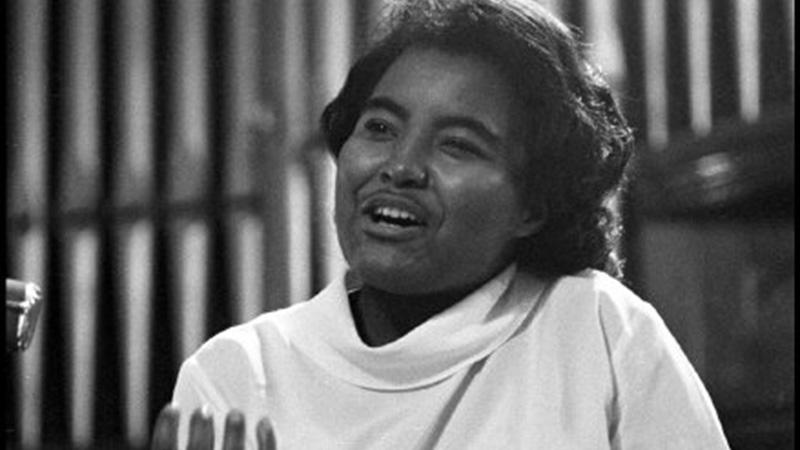
PRATHIA HALL

Posted on 

“As God’s child … I am everything that I’m supposed to be. It may cost my job, it may cost my life, but I want to be free, and I want my children to be free. So I’m going down to the courthouse, and I’m going to sign my name. And I’m going to trust God to take me there, and I’m going to trust God to bring me back.”

Prathia Hall

Martin Luther King Jr. once said, “Prathia Hall is the one platform speaker I would prefer not to follow.” Prathia Hall was the daughter of a Philadelphia minister who passionately worked for racial justice, and she followed in his steps. Hall left college one credit away from graduation to join the Student Nonviolent Coordinating Committee (SNCC) in Georgia where she did voter registration and education work in “Terrible” Terrell County.

In the two years after Hall’s arrival, white terrorists bombed or burned 41 black churches. Hall, who had a reputation as a powerful and moving orator, spoke at a meeting following one of these devastating burnings. In one prayer she repeatedly said, “I have a dream,” – words said to have inspired Martin Luther King’s famous speech.

In Hall’s “deep passion for justice,” she grappled with the intense fear and anger that accompanied her work. “How much of this can human beings take? Even though I fiercely wanted to be a responsible, non-violent participant in this struggle that was no easy feat.”

Looking back on the movement, Hall saw there needed to be space “for the expression of authentic anger, even rage … we might have had even greater power if we had somehow found a way to allow space for the expression of righteous anger.” This was not the case, and in 1966, when SNCC began to move away from its principles of nonviolence, Hall resigned to take up the role of minister at her father’s old church. She pastored there for nearly 25 years and never stopped preaching for justice.

Back to the main page

Source: Woodlands Hills Church


  wh-bug

Tuesday, June 27, 2023

Dispatches

 "For Capitalism to survive, there must be a permanent underclass."

Source: The Young Turks 

Tuesday, June 20, 2023

Dispatches

What does Juneteeth mean to me? Texas finally got the word slavery had ended, and we got the freedom that should have never been denied, and there is a new day for us to realize our goals.

Dispatches

"Truth may be crucified and justice buried,  but one day they will rise again. We must live and face death if necessary with that hope."...Dr. Martin Luther King, Jr.


Georgia Politics September 2026

 Two races in Georgia have seized the spotlight as the 2026 midterm elections move toward autumn.   The Senate and gubernatorial races have ...